Sunday, 8 March 2015

Royal Game of Ur - parts of a redesign document

So recently we have been tasked to make a design document of an ancient game of our choice.
If you've read my previous posts on my blog you'll probably guess that I chose The Royal Game of Ur to redesign and change, this is what I've come up with:

The board layout


First of all I decided to keep the layout found by Leonard Woolley in the royal cemetry of Ur. However, I decided to add an extra tile/space to show the player where they need to get to to finish.
Without the rules this looks very easy as it looks as if you'd only need to move 6 spaces and you're at the finish, however, I added a circle at the opposite end of the board which the players must pass in order to be able to land on the 'Finish' tile. This way players would have to navigate around the whole board rather than leaving any spaces out.

The reason why the finish area is not a proper tile is because I'd rather it be only an indicator for the player to reach, as the original game is nicknamed as 'The game of 20 Squares' I wanted to keep it that way, therefore the finish space only acts as a guide for the player to land on in order to finish with their pieces.

The assets

Again, I've gone with using a 6 sided dice for moving the pieces around the board.

The pieces themselves have been colour coordinated to show who's piece is who. Their colour matches the coloured arrows on the board above to show the direction the player must go towards. Also the back of the pieces have dots on, like the original pieces have. This is so that when the player reaches/passes the circle they must flip their piece over to reveal the dotted side which shows that their piece is heading to the finish space and to prevent confusion over whether the piece is heading to the circle or to the finish.

Pieces are shown below:

The rules

In an actual design document I'd show the rules first, since this is a blog post I wanted to show them after showing the pieces, this is in hope that anyone who has read the above posts would get a rough idea of how to play and what they need to do, with the rules only covering the gaps.




Sunday, 1 March 2015

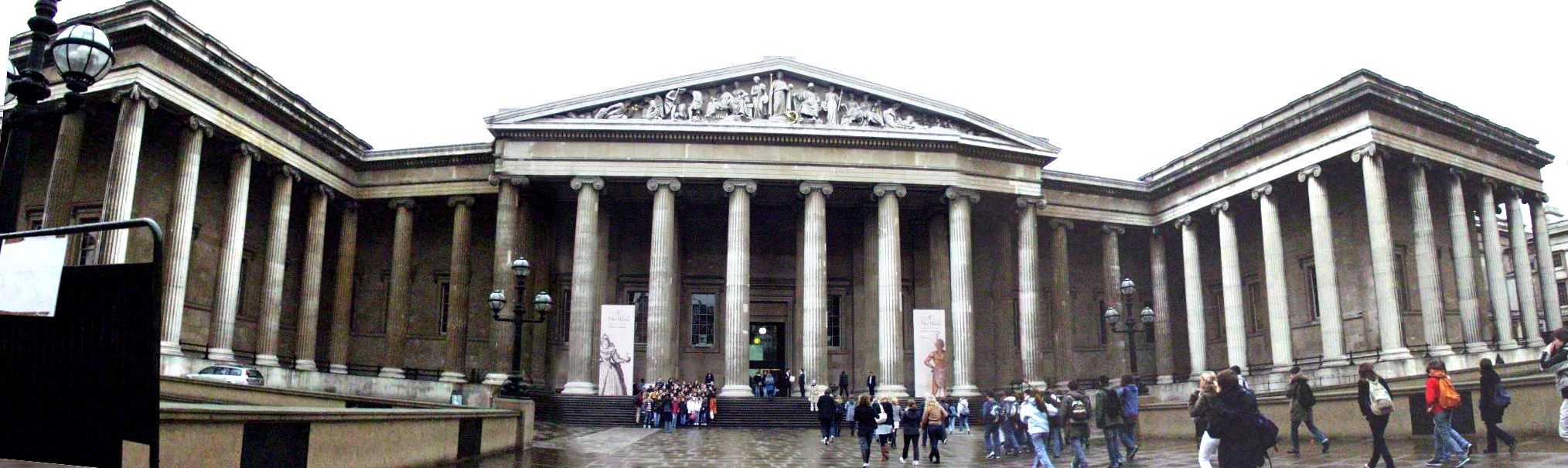
The British Museum - A sad tale


Damn! I wish I didn't miss the bus for this trip...


Now, I do like to go on trips to museums, and was looking forward to going on this trip to go to the British Museum located in central London. I know the bus journey there and back would have been painful however, as I do get travel sick badly.

However, from talking to my friends who did go (and with the help of 'Google results') I got an idea of what happened on the trip.


Since London is the capital of England, it seems logical to say that getting into London was going to be a nightmare due to the traffic, in fact whenever I went to London there was always tons of traffic and the odd bit of road rage. However, once all the road rage is over with and you get to the museum you can forget about the journey and start to become engrossed with the different eras of History.

I know for a fact that if I went to the British Museum I'd be most focused with seeing the 'Royal Game of Ur', after all, I've been studying this ancient board game the most and would of loved to see it in its original form. Since I couldn't see it first-hand, I searched for some images of what it would look like at the museum.

I was able to find another student's pictures of the game in its glass container when he went on the same trip back in 2011, however rather than copying them I'll post a link to his blog post here: http://scott9602.blogspot.co.uk/2011/11/british-museum-trip-that-almost-no-one.html

Overall, I would have loved to have gone on the trip, however, this does not mean that I won't ever go, I do plan to go sometime soon and will be able to see for myself the Royal Game of Ur in its natural glory.

'Games Britannia: Joystick Generation PT 3' - my thoughts

And we're back with Benjamin Woolley with his third part of his series of 'Games Britannia'.

In this episode Benjamin talks about the latest consoles which has led to the development of today's games, starting from the 70's as video games started to become more popular and in the 80's people were able to play them in their living rooms at home.

I was really interested whilst watching this episode, I am really into how early consoles such as the ZX Spectrum and the BBC micro were invented and what games were available on their markets. One game worth noting on both consoles is the game 'Elite' which the player had to buy and sell goods by flying around space to different areas. What you bought and sold made the game easier or harder for the player.

There was one moment which stuck in my mind clearly which was the part on the game 'Carmageddon' which is where the player must run over pedestrians to gain points during a race against other opponents. The game sparked an outrage in social media due to the murdering of innocent people (and grannies especially, as they gave the player more points!) Eventually the developers changed the pedestrians to zombies which caused the outrage to simmer. However, I do remember playing the game when I was younger with the zombie version which was why I did smile when I saw this game come up.

Another very popular game which was mentioned was GTA which also involved driving around and (although not necessary) allowed you to run over pedestrians. 'Rockstar' (or 'DMA' as their old company was known as) who are the creators of GTA originally called the game 'Race and Chase' and had only the cops chasing the player through streets in 1995. Comparing that version with the latest version which is GTA V shows how much development has gone through into making this franchise. To start with, GTA V actually hired prisoners to voice some of the characters to make the game more realistic and before it was released for the latest console of Xbox One and PlayStation 4, the amount of copies sold made it reach the 6th spot of the most sold copies of games whilst holding 7 world records. (Mentioned on Top10Memes YouTube video on GTA V facts: https://www.youtube.com/watch?v=pwIhn9Ljeqo )

In all, this episode of Games Britannia is definitely worth watching as there were many more games mentioned and lots of info to take in from only watching it once.

Saturday, 21 February 2015

'La Decima Vittima' - My thoughts

'Okay, now what's going on?'

That was the most common sentence I said during this movie. 'La Decima Vittima' (English name: 'The 10th Victim') is a rather unusual movie which is about a game of chase where people sign up to take part in and are assigned a target, they must then find their victim and kill them. 

The story goes with a man who ends up falling in love with his victim, rather than shooting her they start building up a romantic relationship between them. Although they confront each other many times throughout the movie to kill one another, they always fail to do so due to their interests in one another.

Since the original was in Italian, the movie did seem quite humorous, whether this was intentional or due to the films age (when we watched the trailer of the movie the class were laughing through most of it, the trailer we watched here: https://www.youtube.com/watch?v=uiJ6oghRqKY ) however the film overall wasn't that bad, and also did remind me of 'The Hunger Games' which is a book/movie about groups of people fighting one another for sport. Plus it also reminds me of gladiators during the Roman era where people fought one another for sport and some people became gladiators for fame and wealth, much like on 'The 10th Victim' where once they get their 10th victim they also game fame and wealth.

Let's tweak - The Royal Game of Ur

Earlier in my blog I wrote about an ancient board game called 'The Royal Game of Ur' which was a board game that was discovered in the South of Iraq in Ur (hence its name)
Our last two lectures were spent looking back at the board games we had chosen to write about in our assignments and to tweak/iterate them however we wanted to. For my tweaks I came up with 2 tweaks:

Use a 6-sided die

Rather than using the stick dice or the triangular shaped dice, I decided to use a more commonly used die which is extremely popular in today's date of playing board games: a 6-sided die. Despite being the most mainstream way of tweaking a board game I wanted to see whether allowing the player to roll a 5 or 6 could actually change how the game plays through and if it's any better or not.
I played a few games with some of my class mates and did pick up on two interesting points:

- The traditional dice highest roll was a 4 which would be quite exciting for the player to get, especially if their piece was on a star or not on the board yet. This meant they could get another go and if they roll another 4 are able to move onto another star for another go. 
-With the introduction of rolling a 5 and 6 this meant there were less 4s being rolled and players were looking to get a 6 instead, after all, it's the new highest number to roll and thus you'll get further with a 6. However, I felt more excited than before when I did roll a 4 and got to move my piece straight from off the board onto the star for another go. 

Overall however, the 6 sided die made the game lose some of its originality alongside todays more recent games and thus I prefer to use the original dice.

Any roll allows you to take your piece off the board

Rather than aiming to try and roll the perfect amount to finally get your piece off the board, I tweaked it so that you can roll any number and if the amount of moves is less than your roll, you can move your piece off the board. This was to try and make the game faster as the player is not trying to aim for a perfect roll (which believe me, happened a lot). Depending on what you're position on the board, this worked well as well as badly:

- this tweak worked well if your pieces are near the end and you only need to roll to get your piece off, especially if it's your last piece. It is relieving knowing that you'll know the next roll guarantees a victory rather than building up stress as the luck of the roll is working against you, allowing your opponent to catch up.

- however, this tweak also works against you if you're on the other end of the game, being the one trying to catch up to the other player. I did start to feel a sense of defeat even before the game ended when my opponent only needed to roll a few more times to win the game as there was no way I could catch up with the amount of pieces I had left (cursing my luck on the rolls, everyone blames it right?) Therefore this tweak could lead to some players quitting way before the game ends as the rule where you must roll the perfect number to leave the board acted as a last hurdle to allow the opponent to catch up.

Overall

I do enjoy playing The Royal game of Ur, I also have thought up of lots of different iterations and tweaks such as:
- allowing the player to move more than one piece in a roll (e.g.: roll a 3, move one piece two spaces and another one space)
- bring in a second set of dice which the player must control two pieces during a turn
- Modifying the game so much to allow up to 4 players (a very ambicious idea however, but could be possible in my eyes)

However, I never got to implement or test these ideas out...yet. But I hope to do so in the future.


Saturday, 14 February 2015

Experimenting with 3DS Max

So, what have I been up to lately?

Well, during my course we've been taught 3D modelling on a program called '3DS Max'. A useful tool, and fun to experiment with. Lately we had to create 5 3D models of objects or furniture in or around 150 polygons which was quite a challenge. I don't think I did too badly and the results of each of my models were impressive, however for my next assignment I will use textures that were made for modelling and not the textures from the pictures I took of my soon-to-be models...

My 3D models, not bad for a first time try (there's 6 as I made the bottom right table but decided to scrap due to too low poly count but kept it as it looked nice)
Then afterwards we were taught a few more skills with 3D modelling, namely the line tool which can draw shapes straight away and can trace around a picture allowing you to model it further. This combined with the lathe tool allowed me to create all sorts of different shapes and object. We were then tasked to create chess pieces during a 3D modelling lecture. I decided to give myself the goal to re-create every single chess piece and even put them on a chessboard just to see if I could do it.

It took me a few hours (and a lot of patience) but I was able to recreate the board and all the pieces, the hardest piece to create was the knight chess piece due to the amount of curves and points you had to put in when tracing the horse. Below is a screenshot of my finished chessboard with the chess pieces:

Sadly, I didn't remove the green seams going around the board when I took this picture.

So what now? I hope to carry on messing around with 3DS Max, hoping to make more complicating objects and just test my skill with creating 3D models, after all, about 6 months ago I had no idea how to use 3DS Max and yet now I'm creating these.

And I'm back!

It feels like forever since my last post which I apologize for. Not only have I been caught up with my work and getting a bit too happy with my leisure time (plus I forgot what my password was which is a bit embarrassing!)

Anyways, to show what I've been up to I'll be making another post shortly after to show what I have been up to and hopefully I can keep to a schedule of posting.